Showing posts with label Thursday Thoughts. Show all posts

Thursday, May 2, 2024

Focus on Self-Care as a Way to Prevent Burnout

When I was younger in my career, a friend bought me a demotivational calendar from despair.com.  Many of the calendar pictures I laughed at.  However, when I came across the one on attitude, I had to pause.  

The picture for March was a lit match standing high above a bunch of other matches that were unlit.  Below it read:  “Burnout:  Attitudes are Contagious.  Mine Might Kill You.”   

Yikes!

Attitude @ Despair.com

At the time, I remember thinking how unfunny this was.  It came at a time in our world when we were seeing mental health issues across the United States.  The Unabomber, marathon bomber, school shootings, club bombings, and concert shootings, were all becoming a part of our world.  As a mom with small boys, it was a scary reality in a world that felt out of control.  

Fast forward to today, the situation has not improved as much as I would like.  However, what has been improved is the acknowledgment of mental health issues and a reminder that we must be able to talk openly about mental health and ask for help, when / if we need it. 

Burnout happens.  It happens when we do not take care of our mental health and exhaust ourselves from attempting to meet expectations of work, family, our communities, heck, the world. 

I have noticed that many of you have been putting in long hours and working tirelessly to meet deadlines and deliver exceptional results.  While dedication and hard work are admirable qualities, it’s essential to prioritize your well-being and prevent burnout. 

Burnout has various severities as well.  Burnout can impact your health and happiness but also diminish your productivity and effectiveness in the long run. 

So, let’s talk about some practical things we can do to prevent burnout and find a healthier balance between work and life:

  1. Recognize the signs:  It’s important to recognize the signs of burnout early on.  If you are feeling exhausted, overwhelmed, or emotionally drained, it may be a sign that you need to take a step back and prioritize self-care.  Pay attention to your physical and mental well-being, and don’t hesitate to use paid time off or other benefits accessible to you to prioritize your well-being. 
  2. Set Boundaries:  We also need to be really good about establishing boundaries between work and personal life to prevent burnout.  Designate a specific time for work and disconnect from work when you are off to prevent work-related stressors during your downtime.  Setting boundaries allows you to recharge and prioritize activities that bring you joy and fulfillment outside of work.
  3. Prioritize Self-Care:  Make self-care a priority in your daily routine.  Engage in activities that promote physical and mental well-being, such as exercise, meditation, yoga, hobbies, reading, or spending time with loved ones.  Remember that taking care of yourself is not selfish but essential for your overall health and happiness.
  4. Manage Your Time Wisely:  Effective time management is key to preventing burnout.  Prioritize tasks based on importance and urgency and allocate time for breaks and relaxation. Utilize tools such as calendars, to-do lists, and time-tracking applications to organize your tasks and ensure that you are making the most of your time.  Use the productivity hacks I have shared these past two months to make better use of your time.  All of these will help you manage your time wisely. 
  5. Learn to Delegate:  Don't be afraid to delegate tasks and responsibilities to your colleagues or supervisors when needed. Delegating tasks not only lightens your workload but also fosters collaboration and teamwork. Trust your teammates to handle tasks competently, and be willing to offer support and assistance when needed.
  6. Communicate Openly:  If you are feeling overwhelmed or stressed, don’t hesitate to communicate with your technical lead, manager, or peers.  Open and honest communication fosters trust and allows us to address issues proactively.  Together, we can find solutions and can support each other through challenging times. 
  7. Take Regular Breaks:  Make sure to take regular breaks throughout the day to recharge and refresh your mind. Step away from your desk, go for a short walk, or engage in a brief relaxation exercise. Taking breaks not only improves productivity but also reduces the risk of burnout by preventing mental and physical fatigue.
  8. Celebrate Achievements (Regardless of the Size): Take time to celebrate accomplishments and milestones along the way.  Recognize your hard work and dedication and acknowledge the progress you’ve made.  Celebrating achievements boosts morale and motivation, making it easier to stay motivated and engaged in your work. 

Did I miss any that you use in your day-to-day life?  Share in the comments below! 

Preventing burnout requires a proactive approach to self-care and well-being.  By prioritizing your health and finding a healthy balance between work and life, you can prevent burnout and thrive in your career.  Remember, you are valued.  You are a valued member of my team.  Your well-being is my top priority. 

Happy Thursday all,

-srt

Wednesday, April 24, 2024

Embracing Growth: The Power of Personal Development Plans and Dreaming Big

As we embark on our journey of growth and development in 2024, I want to underscore the importance of not only setting goals but also dreaming big. 

Like really, really big.

Seriously, you must allow yourself space to imagine the possibilities beyond what you currently know or have experienced.

Dreaming big is not just about wishful thinking—it's about envisioning a future that excites and inspires you, a future where you have unlocked your fullest potential and achieved your wildest aspirations.

Here is why I believe dreaming big is an essential component of your personal development journey:

  1. Vision and Purpose: Dreaming big gives us a vision and a sense of purpose. It helps us define what success looks like on our own terms and clarifies the direction we want to move toward in our lives and careers. When we have a compelling vision to strive for, it becomes easier to stay motivated and focused on our goals.
  2. Breakthrough Innovation: Some of the most groundbreaking innovations and advancements in history have stemmed from daring dreams and audacious goals. By allowing ourselves to dream big, we unleash our creativity and imagination, paving the way for innovative solutions to complex problems. As members of our team, each one of us has the potential to be a catalyst for positive change through our bold ideas and aspirations.
  3. Overcoming Limiting Beliefs: Dreaming big challenges, us to confront and overcome limiting beliefs that may be holding us back. It pushes us out of our comfort zones and encourages us to expand our horizons, challenging the status quo and defying conventional wisdom. When we dare to dream big, we unlock new levels of potential within ourselves and discover what we are truly capable of achieving.
  4. Inspiration and Motivation: Big dreams inspire us to reach for the stars and strive for greatness. They fuel our motivation and drive, pushing us to push past obstacles and persevere in the face of adversity. When we anchor our personal development plans in our most audacious dreams, we tap into a wellspring of inner strength and resilience that propels us forward, even when the journey gets tough.
  5. Impact and Legacy: Dreaming big is not just about personal success—it is about making a meaningful impact and leaving a lasting legacy. When we pursue our dreams with passion and purpose, we have the potential to create positive change in our lives, our communities, and the world at large. By investing in our personal development and daring to dream big, we contribute to a brighter future for ourselves and future generations.

As each of us embarks on our personal development journey, let us not forget to dream big and aim high. Our dreams have the power to shape our destinies and transform the world around us. Together, let us embrace the challenge of dreaming big and pursue our aspirations with courage, conviction, and unwavering determination.

Excited to be part of your journey and hearing about your big dreams within the personal development plan.

Happy Thursday all,

-srt

Thursday, April 18, 2024

Exploring the Spectrum of Skill Sets from I to X

I recently embarked on a journey to learn more about the T-Shaped Skill Set, only to discover four other skill sets.  And, the skill sets vary widely, not just in what they encompass, but also in their breadth and depth. 

Regardless of where you are in your career, seeking personal development, or simply curious about the nature of skills), understanding these variations can be enlightening and help you navigate within your career path.

1. I-Shaped Skill Set |The "I-shaped" skill set is characterized by deep expertise in a specific area, resembling the letter "I" where the vertical stroke represents the depth of knowledge in a particular field. Individuals with an I-shaped skill set are specialists who have dedicated their time and efforts to mastering a narrow domain of expertise.

2. M-Shaped Skill Set |The "M-shaped" skill set is characterized by a moderate level of breadth across various domains, resembling the letter "M" where the peaks represent competency in multiple areas but without deep expertise in any single one. Individuals with an M-shaped skill set are often described as generalists with diverse skills and knowledge. 

3. T-Shaped Skill Set  |  Imagine the letter 'T,' with a broad horizontal bar representing a generalist's breadth of knowledge and a deep vertical stroke symbolizing a specialist's depth in one area. This is the T-shaped skill set—a blend of both breadth and depth. T-shaped individuals possess a strong foundation across multiple disciplines, complemented by expertise in a specific field. They can collaborate effectively across teams, bridging different areas of expertise while contributing specialized knowledge where needed.

4. V-Shaped Skill Set  |The "V-shaped" skill set is characterized by a combination of breadth and depth, resembling the letter "V" where the wide top represents a broad range of skills across various domains, and the pointed bottom represents a depth of knowledge in a specific area. Individuals with a V-shaped skill set, often referred to as "versatilists," possess both generalist and specialist qualities, allowing them to excel in diverse roles and environments.

5. X-Shaped Skill Set  |The "X-shaped" skill set is a comprehensive blend of both breadth and depth, symbolizing the crossing paths of generalist and specialist expertise, resembling the letter "X." Combining the best of both generalists and specialists, the expert-generalist is a master integrator. They possess a solid foundation of knowledge across multiple disciplines, coupled with deep expertise in one or two areas. Expert-generalists excel at synthesizing information from diverse sources, identifying patterns, and solving complex problems holistically. They thrive in interdisciplinary environments, where their ability to connect the dots and offer innovative solutions is highly valued.

Today, the demand for individuals with diverse skill sets is greater than ever. As I dug into each of these wonderful skill sets I recognized that while specialists bring deep expertise, generalists offer flexibility, and expert generalists bridge the gap between disciplines. The key lies in recognizing the value of both breadth and depth and cultivating a skill set that balances the two according to one's goals and aspirations.

I encourage you to assess where you are currently.  Are you an I, M, V, T, or X?  Do you aspire to be a specialist in your field, a versatile generalist, or something in between?

Assessing where you are and where you want to be will help guide your journey toward personal and professional growth.

Always, embrace your strengths, explore new horizons, and remember that true mastery often lies at the intersection of breadth and depth. 

Happy Thursday all,

-srt 

Thursday, April 11, 2024

Raise Your Hand

It wouldn’t surprise you that I was recently reading articles on proactive risk management cultures and companies that are known for their sound practices. 

As I researched more and the names of those companies became known to me, one thing I recognized was a culture that encourages each of us as risk managers to raise our hand when they spot potential risks. 


We know at the heart of a proactive risk management culture is open communication, transparency and accountability.  This topic we discussed in last week's Thursday Thoughts (april 4).

But, a reminder is necessary.  Each and every one of us is a risk manager in our own right.  Whether you are a developer, engineer, architect, tester, analyst, manager, or scrum master, your actions and decisions have a direct impact on the risks we face. 

We often hear the term "risk manager" and immediately associate it with a specific department or individual responsible for assessing and mitigating risks. While it's true that some teams specialize in risk management, the reality is that risk management is everyone's responsibility. After all, who knows our systems, processes, and projects better than the individuals working on them day in and day out?

It's time for us to embrace this responsibility fully. We must recognize that identifying and addressing risks isn't something that happens only during scheduled meetings or audits—it's an ongoing effort that requires vigilance and proactive participation from each team member. That's why I'm reaching out to you today with a simple yet powerful message:  raise your hand when you see risky behavior. 

What do I mean by risky behavior? It could be anything from cutting corners to meet tight deadlines, neglecting security protocols, or overlooking potential flaws in our code. It could also involve ignoring warning signs or dismissing feedback from colleagues about potential risks. Whatever form it takes, risky behavior poses a threat to our customers, applications, projects, our reputation, and our portfolio as a whole.

So why is it essential for us to speak up when we observe risky behavior? Firstly, because it's the right thing to do. As professionals committed to delivering high-quality solutions, we owe it to ourselves and our stakeholders to uphold the highest standards of integrity and excellence. Turning a blind eye to risks not only jeopardizes our projects but also undermines the trust and confidence that others have placed in us.

Secondly, because our collective expertise is our most potent weapon against risk. Each of my squads has a collective expertise of 20 years +.  Each of us brings a unique set of skills, insights, and experiences to the table. By fostering a culture where open communication and constructive feedback are encouraged, we tap into the collective wisdom of our team and strengthen our ability to anticipate and mitigate risks effectively.

Lastly, our success as a team hinges on our ability to manage risks proactively. In today's hyperconnected world, where cyber threats, regulatory requirements, and market dynamics are constantly evolving, risk management isn't just a nice-to-have—it's a strategic imperative. By identifying and addressing risks early on, we position ourselves to deliver value more consistently, protect our assets more effectively, and seize opportunities with confidence.

So, my fellow risk managers 😉, I urge you to take ownership of your role in protecting our customers and safeguarding our applications, our portfolio, our division and our company. If you see something that doesn't sit right, if you sense a potential risk lurking beneath the surface, don't hesitate to speak up. Whether it's raising concerns with your team lead, initiating a dialogue during a meeting, or flagging an issue in our tracking system, your voice matters.

Together, let's embrace our roles as risk managers wholeheartedly. Let's cultivate a culture where risk awareness is ingrained in everything we do, where transparency and accountability are the norm, and where we stand united in our commitment to excellence.

Sincerely, thank you for your dedication, your expertise, and your unwavering commitment to excellence. Together, we will navigate the challenges ahead and emerge stronger, smarter, and more resilient than ever before.

Happy Thursday, 

-srt


Thursday, April 4, 2024

Embracing Errors as Opportunities for Growth

In our dynamic realm of teamwork, where collaboration, speed, and innovation reign supreme, it's inevitable that mistakes will be made along the way.  Whether it is a missed deadline, a miscommunication, or a project gone awry, errors happen - even to the most senior, dedicated and capable teams.  However, it is not the mistake itself that defines us, but rather how we choose to respond to it.  In these moments of adversity, the importance of accepting accountability as a team cannot be overstated.  By embracing accountability with a positive attitude, honesty, and a commitment to rebounding from setbacks, teams can transform errors into opportunities for growth and success. 


Accepting accountability as a team is not about pointing fingers or assigning blame; it's about taking collective ownership of the situation and working together to find the cause and solutions.  It requires a shared understanding that mistakes are a natural part of the learning process and an opportunity for reflection and improvement.  Instead of dwelling on the negativity of the situation, teams must approach errors with a positive attitude, viewing them as valuable lessons that can propel them towards greater success. 

Honesty is the cornerstone of team accountability.  It's about being transparent and forthright about the mistake, without fear of judgment or reprisal.  Honesty fosters trust and open communication within the team, creating a supportive environment where team members feel comfortable admitting their mistakes and seeking help when needed or raising their hand when they cannot deliver to an unrealistic timeframe.  By embracing honesty, teams can address issues more effectively and prevent them from escalating into larger problems down the line.  

Rebounding from a mistake as a team requires a proactive approach to problem-solving and collaboration.  Once accountability has been accepted, it's essential to come together as a team to identify the root cause of the error and develop a plan of action to address it.  This may involve conducting in-depth root cause analysis or lessons learned to develop a plan of action to address.  The plan will show progress with a focus on mitigating the risk of the error happening again, in the same way.  By working together towards a common goal, teams can rebound from setbacks with resilience and determination.  

Furthermore, rebounding from a mistake as a team provides an opportunity for collective growth and learning.  It allows team members to reflect on their processes, identify areas for improvement, and implement changes to prevent similar errors in the future.  By embracing accountability and learning from their mistakes, teams can become stronger, more cohesive, and better equipped to tackle future challenges. 

I can not stress enough the importance of first accepting accountability as a team.  By embracing accountability with a positive attitude, honesty, and a commitment to rebound from setback, teams can transform errors into opportunities for learning, growth, and success.  Henry Ford once said, "The only real mistake is the one from which we learn nothing."  Let's embrace our mistakes as opportunities to learn, grow, and achieve greater heights as a team. 

Happy Thursday all,

-srt

Thursday, March 28, 2024

Unlocking Productivity: The Power of 1-3-5

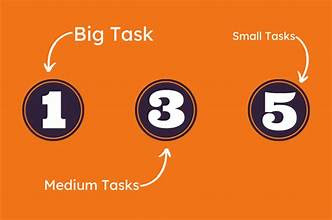
In a world where distractions seem to lurk around every corner and the to-do lists never seem to end, finding a method to boost productivity becomes paramount. Enter the 1-3-5 method - a simple yet effective strategy to tackle tasks and maximize efficiency. 

Understanding the 1-3-5 Method 
The concept behind the 1-3-5 method is beautifully simple: each day, you focus on accomplishing one big task, three medium tasks, and five small tasks. By breaking down your workload into these manageable chunks, you can maintain focus, prioritize effectively, and make steady progress toward your goals.


The Power of Prioritization

At the heart of the 1-3-5 method lies prioritization. By selecting one major task, three medium tasks, and five small tasks, you're forced to evaluate the importance and urgency of each item on your to-do list. This ensures that you dedicate your time and energy to the tasks that will have the greatest impact on your overall objectives. 

Overcoming Overwhelm 
One of the biggest obstacles to productivity is feeling overwhelmed by the sheer volume of tasks ahead. The 1-3-5 method provides a clear framework for tackling your workload, breaking it down into manageable pieces. This not only makes it easier to get started but also helps to prevent burnout by ensuring you don't spread yourself too thin. 

Maintaining Focus 
In today's hyper-connected world, staying focused can be a challenge. With constant notifications, emails, and distractions vying for our attention, it's easy to lose sight of our goals. The 1-3-5 method encourages single-tasking by limiting the number of major tasks you tackle each day. This allows you to concentrate fully on the task at hand, increasing both efficiency and quality of work. 

Flexibility and Adaptability
While the 1-3-5 method provides a structured approach to productivity, it's also highly flexible. Life is unpredictable, and priorities can shift from one day to the next. By dividing your tasks into different categories, you can easily adapt your plan as needed. If a new, urgent task arises, you can simply slot it into one of the available slots, ensuring that nothing falls through the cracks. 

Putting It Into Practice
Implementing the 1-3-5 method is straightforward. Start by listing out all the tasks you need to accomplish for the day. Then, identify one major task, three medium tasks, and five small tasks. Be realistic about what you can achieve in a day and don't overload yourself. As you work through your list, check off each item as you complete it, and celebrate your progress along the way. 

In a world where time is a precious commodity, finding ways to maximize productivity is essential. The 1-3-5 method offers a simple yet powerful approach to tackling your to-do list and achieving your goals. 

By prioritizing tasks, maintaining focus, and staying flexible, you can unlock your full potential and make the most of each day. So why not give it a try? You might just be amazed at what you can accomplish.

Happy Thursday all,
-srt

Thursday, March 21, 2024

Unpacking the Pickle Jar Theory: Prioritizing What Matters Most

Years ago, a simple yet profound theory swept through our technology division, igniting a wave of change in prioritization and focus. It all began with an email from a friend, containing a video of a professor introducing the Pickle Jar Theory. Little did anyone know, this theory would become the cornerstone of a transformative campaign known simply as "The Jar."

Upon receiving the video, I felt inspired to weave its essence into a short story that resonated with our team's objectives. The story, revolving around a time management expert and a Mason jar filled with rocks, gravel, sand, and water, captivated the attention of the Head of Technology. Recognizing its potential, he embraced it fervently, envisioning its power to reshape our approach to prioritization.

Thus, "The Jar" campaign was born—a rallying cry for every team member in the technology division to reassess their priorities and focus on what truly mattered. It was a simple yet impactful endeavor, encompassing personalized notes from the Head of Technology, frames adorned with the emblem of "The Jar," and polo shirts bearing the campaign logo alongside our division name. Collaborating with a marketing company, we brought the campaign to life, crafting merchandise that embodied the essence of the Pickle Jar Theory.

Reflecting on the Pickle Jar Theory, I couldn't help but ponder its relevance in our current world reality, where the incessant demands of work and personal life often leave us feeling overwhelmed and unbalanced. Taking a moment to pause and identify our "big rocks" amidst the chaos can be a game-changer, helping us regain control of our priorities and fostering a sense of fulfillment and purpose.

So, let's delve deeper into the concept of the Pickle Jar Theory. Imagine a large, empty pickle jar before you, awaiting its contents.

Now, envision filling it with an array of elements—rocks representing major goals and commitments, pebbles embodying medium-sized tasks and endeavors, sand signifying everyday responsibilities, and water symbolizing minor distractions and time-wasters.

Starting with the rocks, the big, important things in your life—career aspirations, personal growth objectives, cherished relationships—establish a solid foundation for your priorities. Next, allocate space for the pebbles—tasks and commitments that complement your big rocks—followed by the sand—small, everyday tasks that fill your schedule. Be mindful of the water, the minor distractions that can dilute the impact of your rocks and pebbles.

Applying the Pickle Jar Theory to your life begins with identifying your big rocks, the non-negotiable priorities deserving of your time and attention. Once established, allocate space for your pebbles, sand, and water accordingly. Remember, the goal isn't to fill the jar to the brim with as much as possible but to make conscious choices and focus on what truly matters most to you.

As you navigate the complexities of daily life, prioritize what truly matters, carve out space for the big rocks, and watch as everything else falls into place. How will you apply the principles of the Pickle Jar Theory to your life this week?

 Happy Thursday all,

-srt

__ 

Sharing a link to the original story of “The Jar” from early 2009 that was included in the double-sided frame along with a rewrite below:

“One day, an expert in time management was speaking to a group of business students and, to drive home a point, used an illustration those students will never forget.

As he stood in front of the group of high-powered overachievers he said, "Okay, time for a quiz," and he pulled out a one-gallon, Mason jar and set it on the table in front of him. He also produced about a dozen fist-sized rocks and carefully placed them, one at a time, into the jar.

When the jar was filled to the top and no more rocks would fit inside, he asked, "Is this jar full?" Everyone in the class yelled, "Yes." The time management expert replied, "Really?"

He reached under the table and pulled out a bucket of gravel. He dumped some gravel in and shook the jar causing pieces of gravel to work themselves down into the spaces between the big rocks. He then asked the group once more, "Is the jar full?"

By this time the class was on to him. "Probably not," one of them answered.

"Good!" he replied. He reached under the table and brought out a bucket of sand. He started dumping the sand in the jar and it went into all of the spaces left between the rocks and the gravel. Once more he asked the question, "Is this jar full?" "No!" the class shouted. Once again he said, "Good."

Then he grabbed a pitcher of water and began to pour it in until the jar was filled to the brim. Then he looked at the class and asked, "What is the point of this illustration? One eager beaver raised his hand and said, "The point is, no matter how full your schedule is, if you try really hard you can always fit some more things in it!" "No," the speaker replied, "that's not the point.

The truth this illustration teaches us is, "If you don't put the big rocks in first, you'll never get them in the jar."

What are the big rocks in your life?

Thursday, March 7, 2024

Letting Go for Inner Peace

Have you noticed that on this journey of life, we often encounter situations that challenge our principles, beliefs, and emotions.  One of the most profound teachings that can guide us through such moments is the story of "Two Monks and a Woman."  

This timeless tale encapsulates the essence of letting go of grudges, judgments, and attachments, offering invaluable wisdom for cultivating inner peace and freedom.  

Cozy up. Grab your coffee or tea.  Put your feet up (not on the table). Get ready, 'cause it is story time (thank my mother – Thank you Mom! - for my knowledge of all things Aesop Fables). 

The Tale of Two Monks
Two monks were traveling together on a muddy road when they came across a swollen river. At the riverbank stood a woman who was unable to cross the river on her own. Seeing her dilemma, one of the monks immediately picked her up and carried her across the river, allowing her to continue her journey.

After crossing the river, the two monks continued their way in silence. However, the monk who had carried the woman seemed troubled and preoccupied. Several hours passed, and finally, the other monk could not contain his curiosity any longer and asked his companion what was bothering him.

The monk who had carried the woman replied, "As monks, we have taken vows not to touch women, yet I carried that woman across the river."

His companion simply smiled and said, "I put her down on the other side of the river.  Why are you still carrying her?"


The Lesson Unveiled
The crux of this tale lies not in the physical act of carrying the woman but in the mental burden the monks carried afterward.  The monk's preoccupation with breaking a vow reflects our tendency to hold onto grudges, judgments, and attachments long after the event has passed.  By clinging to these negative emotions, we perpetuate our suffering, just like the monk who could not let go of his actions. 


Tips for Letting Go

1.      Awareness:  It is important to recognize when you are holding onto grudges, judgments, or attachments.  Awareness is the first step towards transformation.

2.     Acceptance:  Accept that holding onto these negative emotions only hinders your well-being and inner peace.   Embrace the idea that letting go is a courageous act of self-compassion.

3.     Release:  Practice forgiveness towards yourself and others involved.  Understand that forgiveness does not condone the actions but frees you from the emotional burden they carry.  

4.    Mindfulness:  Cultivate mindfulness through meditation, yoga, or mindful breathing.  These practices help you observe your thoughts and emotions without judgment, allowing them to pass like clouds in the sky.

5.     Gratitude:  Shift your focus from what went wrong to what you are grateful for in the present moment.  Gratitude opens your heart to positivity and fosters a mindset of abundance. 

6.    Self-Compassion:  Be gentle with yourself during the process of letting go.  Recognize that it is okay to feel hurt or upset, but also empower yourself to choose peace and healing.  

7.    Reframing:  Practice reframing negative experiences into lessons or opportunities for growth.  By extracting wisdom from challenges, you reclaim your power over them.  


The story of "Two Monks and a Woman" serves as a poignant reminder of the transformative power of letting go.  By releasing grudges, judgments, and attachments, we liberate ourselves from the shackles of the past and embrace the richness of the present moment.  Remember, letting go is not a sign of weakness but a testament to our resilience and capacity for inner peace. 

As we navigate life's sometimes muddy waters, may we heed the wisdom of the two monks and choose the path of freedom and compassion. 

What grudge, burden, or expectation might you let go of this week?  

Happy Thursday all,

-srt

Thursday, February 29, 2024

Enhance Your Efficiency with the Pomodoro Technique

Being productive and efficient in our environment is essential. And, being productive does not mean working harder, but it means working smarter.

A technique that I have used for many years is the Pomodoro Technique - a time management approach designed to boost productivity and focus by breaking work into manageable intervals. 

Understanding the Pomodoro Technique

The Pomodoro Technique, conceived by Francesco Cirillo, is a straightforward method for managing time and improving concentration. 

Here is a breakdown of its key steps:

1. Select the task:  Choose a specific task for the project you want to tackle. 

2. Set a timer:  Set a timer for a designated period, usually 25 minutes, known as a "Pomodoro"

3. Work on the task:  Concentrate exclusively on the chosen task until the timer rings. 

4. Take a short break:  after completing a Pomodoro, take a brief break of around 5 minutes to recharge.

5. Repeat and review:  Repeat the cycle for multiple Pomodoros, and after every four intervals, take a longer break for rejuvenation.

Examples of Pomodoro Technique in Professional Settings

1. Project Managers / Scrum Masters

Project Managers / Scrum Masters  juggle multiple tasks simultaneously, making time management crucial for success.  Here is how the Pomodoro Technique can aid Project Managers / Scrum Masters:

Step One:  Identify a key aspect of your project that requires attention

Step Two:  Set a Pomodoro for 25 minutes and focus on completing a specific task, such as reviewing project timelines or communicating with team members. 

Step Three:  After each Pomodoro, take a short break to refocus your energy.

Step Four:  Repeat the process for various project-related activities, ensuring steady progress and efficient time allocation. 

By applying the Pomodoro Technique, Project Managers / Scrum Masters can maintain momentum, tackle complex tasks systematically, and optimize their productivity.  

2. Engineers / Developers

Engineers / Developers face intricate technical challenges that demand unwavering concentration and problem-solving skills.  Here is how engineers and developers can leverage the Pomodoro Technique:

Step One:  Select a technical problem that requires attention, such as coding a software module, learning a skill, or designing a circuit

Step Two:  Set a Pomodoro for 25 minutes and immerse yourself in addressing the chosen task. 

Step Three:  Take short breaks between Pomodoros to prevent mental fatigue and maintain clarity of thought.  Always remember to break to refocus your energy.

Step Four:  Continue the cycle, gradually progressing through different aspects of the engineering task at hand. 

Preparing for Pomodoro Technique

Like all things, you have to prepare for the Pomodoro Technique before you jump in. 

You will need:

  1. Timer - Cirillo used a tomato-shaped timer, but you have a choice of the timer you will use.  I do not recommend using your phone.  I use a kitchen timer.  I recommend investing in a physical timer that is easy to set and start for each Pomodoro. 
  2. Task List - Before entering the Pomodoro, I have a task list of items I will tackle during the session.  I recommend keeping it simple to start and then increasing as you get the hang of the technique.
  3. Workplace Preparation - Make sure you are in a space where you can focus.  for me, this means being organized, clean, with supplies at hand, and comfortable.  It also needs to be away from high-noise areas, traffic areas and other distractions. 
  4. Distraction Plan - Absolutely essential for me, a person distracted easily, is to have a distraction plan with a few things that I turn off before I enter into a Pomodoro. 
    1. Notify team that I am DND for xx time.
    2. Mark IM as Away
    3. Shut down Email
    4. Put phone in airplane mode and mute all sounds
    5. Place a sign on office door to ensure family / colleagues know that I am not available

By breaking down complex technical tasks into manageable intervals, engineers and developers can enhance their focus, optimize problem-solving strategies, and achieve efficient outcomes. 

The Pomodoro Technique has been a lifesaver for me.  It offers me (and you) a structured approach to time management.  The benefits are endless and the application is so simple.  What items might you consider breaking into focused intervals and incorporating regular breaks, so individuals can maximize productivity, sustain concentration, and achieve optimal results?  

Happy Thursday all,

-srt

Thursday, February 15, 2024

Ruthless Prioritization and the Pareto Principle

I recently came across a thought-provoking post on LinkedIn titled "Ruthless Prioritization." The author shared how they transformed their life by implementing three key practices they termed as "ruthless prioritization":

1)          1) Streamlining or “slashing” his to do list
    2) Embracing the the Pareto Principle (also known as the 80/20 rule)
    3) Ceasing activities that did not “move the needle forward”

As I delved into the author's insights, it became apparent that he grappled with the challenge of determining where and how to prioritize effectively. Their quest was to pinpoint the 20% of actionable tasks that drive 80% of the results.

This post sparked a realization for me: effective prioritization is a critical skill for both personal and professional success. Ruthless prioritization (I love that visual), which involves focusing solely on the most crucial tasks and objectives, can revolutionize productivity and efficiency.

Central to ruthless prioritization is the Pareto Principle, named after Italian economist Vilfredo Pareto, which suggests that roughly 80% of outcomes stem from 20% of efforts. This principle is applicable across various domains, from business and time management to personal growth. By embracing the Pareto Principle, we can identify high-impact tasks and allocate resources accordingly.

Here's how ruthless prioritization, guided by the Pareto Principle, can revolutionize your productivity:

Identify the Vital Few: In any given project or endeavor, there are typically a few tasks or activities that contribute the most significant results. These are the "vital few" that align with the 20% in the Pareto Principle. By identifying these high-impact tasks, you can direct your focus and energy where it matters most.

Eliminate the Trivial Many: On the flip side of the Pareto Principle are the "trivial many" – the less important tasks that consume time and resources without yielding significant results. Ruthless prioritization involves eliminating or delegating these low-impact activities to free up valuable time and energy for more impactful endeavors.

Focus on Results, Not Busywork: It's easy to get caught up in a flurry of activity without making meaningful progress. Ruthless prioritization encourages a shift from being busy to being productive. Instead of filling your schedule with tasks, focus on those that align with your goals and produce tangible outcomes.

Adaptability and Flexibility: Priorities can shift rapidly, especially in dynamic environments. Embracing ruthless prioritization means being willing to adapt and adjust as needed. Regularly reassess your tasks and goals to ensure they remain aligned with your objectives and the changing circumstances.

Maximize Efficiency: By concentrating your efforts on the vital few, you can maximize efficiency and effectiveness. With fewer distractions and less time spent on non-essential tasks, you can accomplish more in less time. This allows you to allocate resources more strategically and achieve greater results with minimal effort.

Ruthless prioritization, guided by the Pareto Principle, is a potent strategy for maximizing performance and productivity. By focusing on high-impact tasks and minimizing distractions, we can streamline their efforts and achieve remarkable success. Whether in business endeavors, personal growth journeys, or any other pursuit, embracing ruthless prioritization can unlock new levels of achievement and fulfillment.

Happy Thursday all,

-srt

Thursday, February 1, 2024

Mastering Execution: A Guide to Achieving Greatness


In the pursuit of success, ideas and plans are essential, but the true indicator of achievement lies in execution.  

Being great at execution is a skill that sets high achievers apart from the rest.  It is a skill that can be learned, but must be practiced over and over again. 

Let’s delve into the key principles and strategies that can help you become great at execution and turn your plans into reality.

1.    Set Clear and Measurable Goals: Begin with defining clear and specific goals. Make them measurable so that progress can be tracked. Clear objectives provide a roadmap for execution, keeping you focused on what needs to be achieved.

2.   Develop a Detailed Plan: Once goals are established, create a detailed plan outlining the steps needed to accomplish them. Break down larger tasks into smaller, manageable components. A well-structured plan serves as a guide for effective execution.

3.   Prioritize Tasks: Not all tasks are of equal importance. Prioritize activities based on their impact on overall goals. This ensures that you address high-priority items first, maximizing efficiency and impact.

4.   Embrace Flexibility: While planning is essential, be prepared to adapt. Circumstances may change, requiring flexibility in your approach. Being adaptable allows you to navigate challenges and adjust your execution strategy as needed.

5.   Foster a Culture of Accountability: Accountability is a cornerstone of successful execution. Clearly define responsibilities and ensure team members are aware of their roles. Regular check-ins and transparent communication help maintain accountability throughout the execution process.

6.   Focus on Time Management: Effective execution requires efficient time management. Set deadlines for tasks, allocate time wisely, and avoid procrastination. Time-conscious execution enhances productivity and keeps projects on track.

7.   Communicate Clearly and Consistently: Communication is key to successful execution. Clearly convey expectations, updates, and changes to everyone involved. Consistent communication fosters a shared understanding and keeps the team aligned with the execution plan.

8.  Monitor Progress: Regularly monitor progress against the established plan. Use key performance indicators (KPIs) to measure success and identify areas that may need adjustment. Monitoring progress provides valuable insights for ongoing improvements.

9.  Celebrate Milestones: Recognize and celebrate achievements along the way. Celebrating milestones boosts morale and motivates the team to stay committed to the execution process. Positive reinforcement contributes to a culture of success.

10. Learn from Setbacks: Setbacks are inevitable, but they also offer opportunities for learning and improvement. Instead of viewing setbacks as failures, analyze them objectively, identify lessons learned, and use that knowledge to refine your approach moving forward.

Becoming great at execution requires a combination of planning, adaptability, accountability, and effective communication.  By incorporating these principles into your approach, you can enhance your execution skills and transform your ideas into tangible success.  

Happy Thursday all, 

-srt

Thursday, January 25, 2024

Mastering the Art of Candor: A Guide to Honest Expression

Candor is a valuable trait that fosters openness and authenticity in communication. Being candid involves expressing thoughts, feelings, and opinions honestly, yet tactfully.

Sometimes being candid is hard, because we do not want to hurt anyone’s feelings in the process.  However, candor is essential for living authentically and if we are going to live a life that is open and honest we need to be able to have candid conversations. 

Let’s dig into how we can express candor effectively.

1.   Self-awareness: Before expressing candor, it's crucial to be self-aware. Reflect on your own emotions, motivations, and biases. Understanding your perspective allows you to communicate more genuinely.

2.  Choose the right time and place: Timing is key when expressing candor. Pick a suitable moment and a private setting to ensure your message is received with the attention it deserves. Avoid discussing sensitive matters in public or high-stress situations.

3.   Be specific and clear: Clearly articulate your thoughts to avoid misunderstandings. Provide specific examples or instances that support your viewpoint. Clarity helps others grasp the essence of your message.

4.  Use "I" statements: Frame your thoughts using "I" statements to express your feelings and opinions without sounding accusatory. This approach fosters personal responsibility and promotes understanding.

5.  Balance honesty with empathy: While being honest, consider the feelings of the other person. Expressing candor doesn't mean being blunt or insensitive. Balance your honesty with empathy to create a constructive dialogue.

6.  Active listening: Encourage a two-way conversation by actively listening to the other person's perspective. Understanding their viewpoint enhances mutual respect and facilitates more open communication.

7.   Offer solutions: If your candor involves addressing a problem, suggest potential solutions. This proactive approach demonstrates your commitment to finding resolutions and fosters a collaborative atmosphere.

8.  Handle reactions gracefully: Not everyone may react positively to candid feedback. Be prepared for different responses and handle them with grace. Maintain a calm demeanor and be open to further discussion.

9.  Practice humility: Acknowledge that your perspective is just one of many. Embrace humility and be open to the possibility that others may see things differently. This promotes a culture of continuous learning and growth.

10. Build trust over time: Candor is most effective in a relationship built on trust. Consistently practicing open and honest communication helps establish trust over time, strengthening the foundation for genuine connections.


By combining self-awareness, empathy, and clear communication, we can express candor in a way that fosters understanding and promotes positive connections with others. I truly believe this done over and over again creates a relationship built on trust.  And in doing so will enhance personal and professional relationships and help us to live an authentic life.  Isn’t that what life is all about?

Welcome your thoughts on how you have mastered the art of candor. Share in the comments below!

Happy Thursday all,

-srt

Thursday, January 11, 2024

Nurturing Curiosity: Unlocking your Inner Thomas Edison

"I have not failed. I've just found 10,000 ways that won't work." - Thomas Edison

Curiosity, the dynamic force propelling innovation, has steered humanity through remarkable discoveries. Thomas Edison, a prominent inventor, emerges as a symbol of curiosity, showcasing how persistent questioning and exploration can reshape the world.

Why Thomas Edison? The answer unfolded as I immersed myself in "American Experience: Edison" on PBS, rekindling thoughts of his life, inventions, and impact on American society. In line with our performance objective of fostering an innovative environment, I discovered inspiration in the steps Edison took. Let's delve into it...

Inquisitive Early Years:

Edison's curiosity journey commenced in his formative years, where he transformed his family's basement into a laboratory. His thirst for knowledge led to countless experiments, revealing a genuine fascination with understanding the world from a young age.

The Persistence of a Curious Mind:

Edison's career was marked by an unwavering pursuit of solutions. The invention of the practical electric light bulb, after numerous failed attempts, showcased his tenacious curiosity. Viewing failure not as a setback but as a step closer to success, Edison embodied the resilience that curiosity instills.

Diverse Interests and Multidisciplinary Approach:

Edison's curiosity transcended boundaries, touching various fields from motion pictures to the phonograph. His multidisciplinary approach demonstrates how curiosity, given free rein, leads to groundbreaking discoveries across seemingly unrelated domains.

Problem-Solving and Innovation:

Curiosity for Edison wasn't just about asking questions; it was about solving problems. Inventions like the phonograph aimed at enhancing the human experience, highlighting how curiosity acts as a powerful catalyst for positive change.

Embracing Failure as a Stepping Stone:

Edison's famous quote, "I have not failed. I've just found 10,000 ways that won't work," encapsulates his attitude towards failure. Setbacks fueled his curiosity and determination, showcasing the transformative power of a curious mind.

Which leads to how might we embrace curiosity in our lives starting with the most simple which is to ask thoughtful questions and going from there.

  1. Ask Thoughtful Questions: Challenge yourself to ask thought-provoking questions about the world around you. Whether pondering everyday items or questioning norms, the habit of asking questions fuels curiosity.
  2. Experiment and Overcome Failure: Edison's quote underscores the importance of experimentation. Engage in hands-on experiences, tinker with ideas, and overcome failure as a stepping stone toward discovery.
  3. Diversify Your Interests: Cultivate a multidisciplinary mindset by exploring interests beyond your primary focus. Embracing diverse subjects broadens your perspective and sparks new connections between seemingly unrelated concepts.
  4. Continuous Learning: Edison's appetite for knowledge fueled lifelong learning. Engage in continuous learning through books, online courses, podcasts, or workshops to nurture your curiosity.
  5. Collaborate and Share Ideas: Foster a collaborative environment by sharing thoughts and ideas. Engaging in discussions, seeking feedback, and learning from diverse perspectives enriches understanding and fuels collective curiosity.
  6. Challenge the Status Quo: Question the status quo, whether reimagining work processes or proposing innovative solutions. A curious mindset prompts you to challenge existing norms and explore new possibilities.

Thomas Edison's legacy teaches us that curiosity is an active pursuit, not a passive trait. By asking questions, experimenting, diversifying interests, embracing continuous learning, fostering collaboration, and challenging the status quo, you can unlock your inner Edison. Every question asked and every failure encountered brings you closer to illuminating your path with newfound insights and discoveries.

Happy Thursday all,

-srt